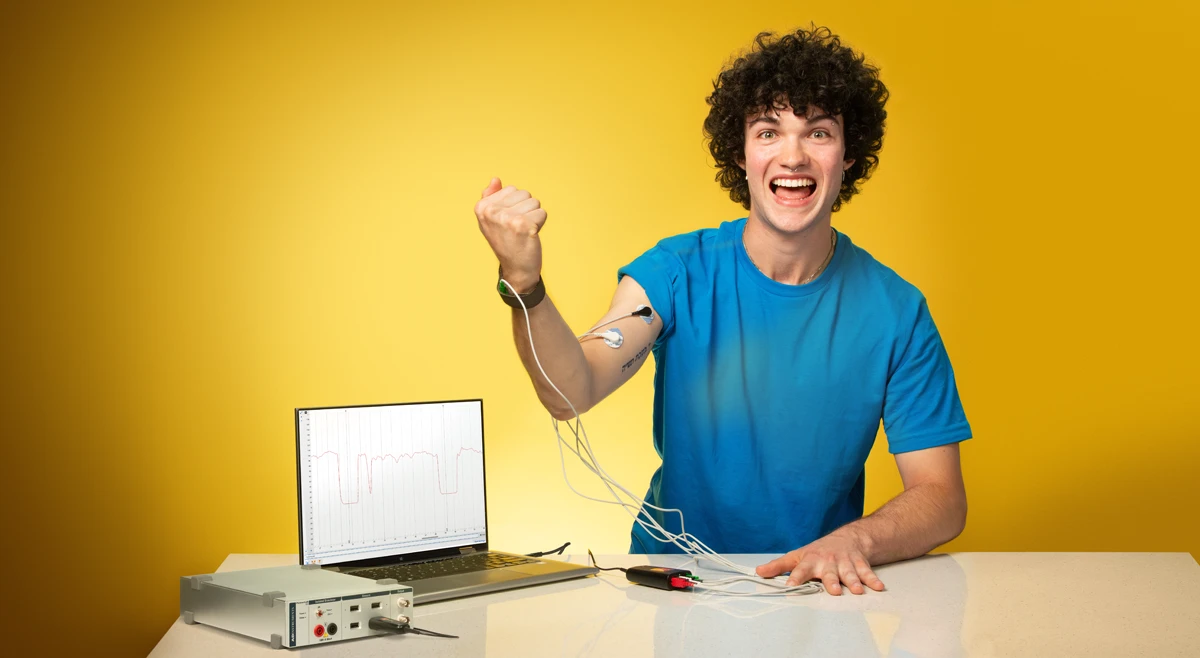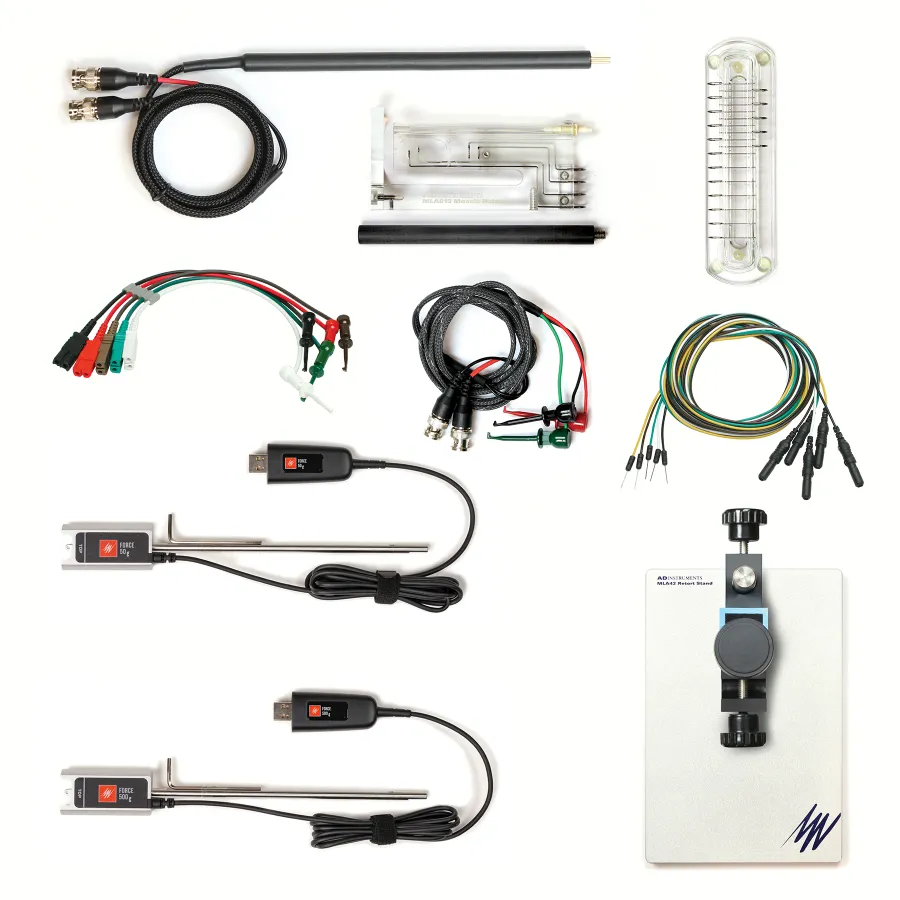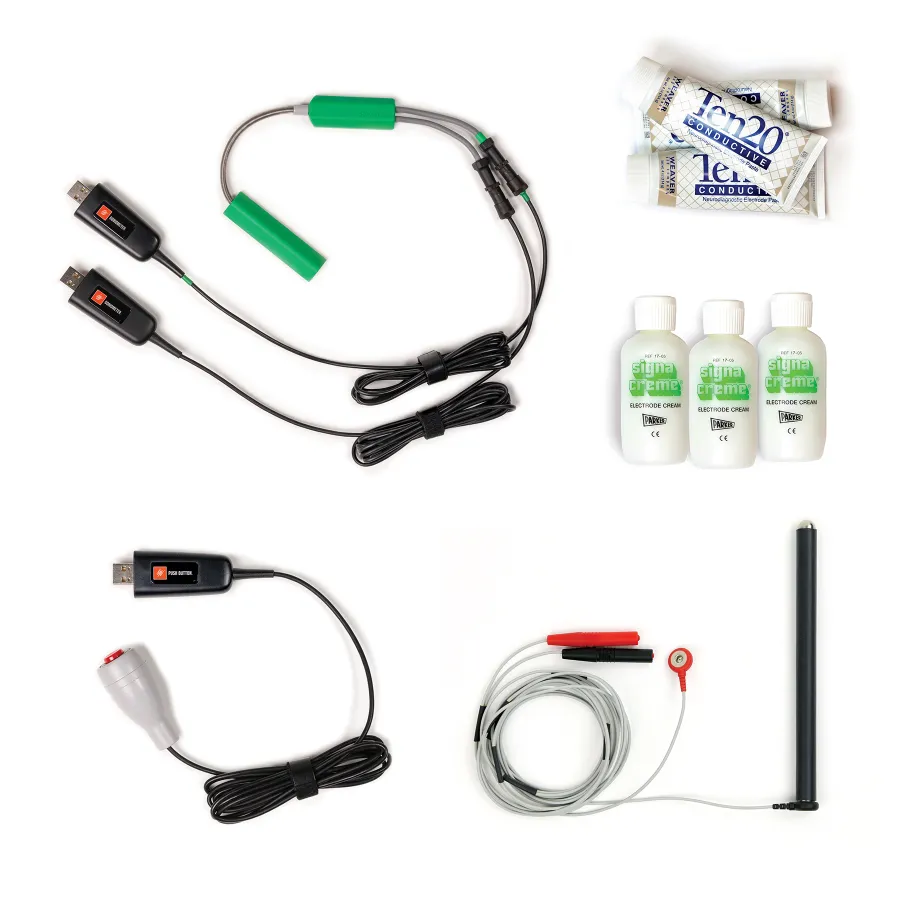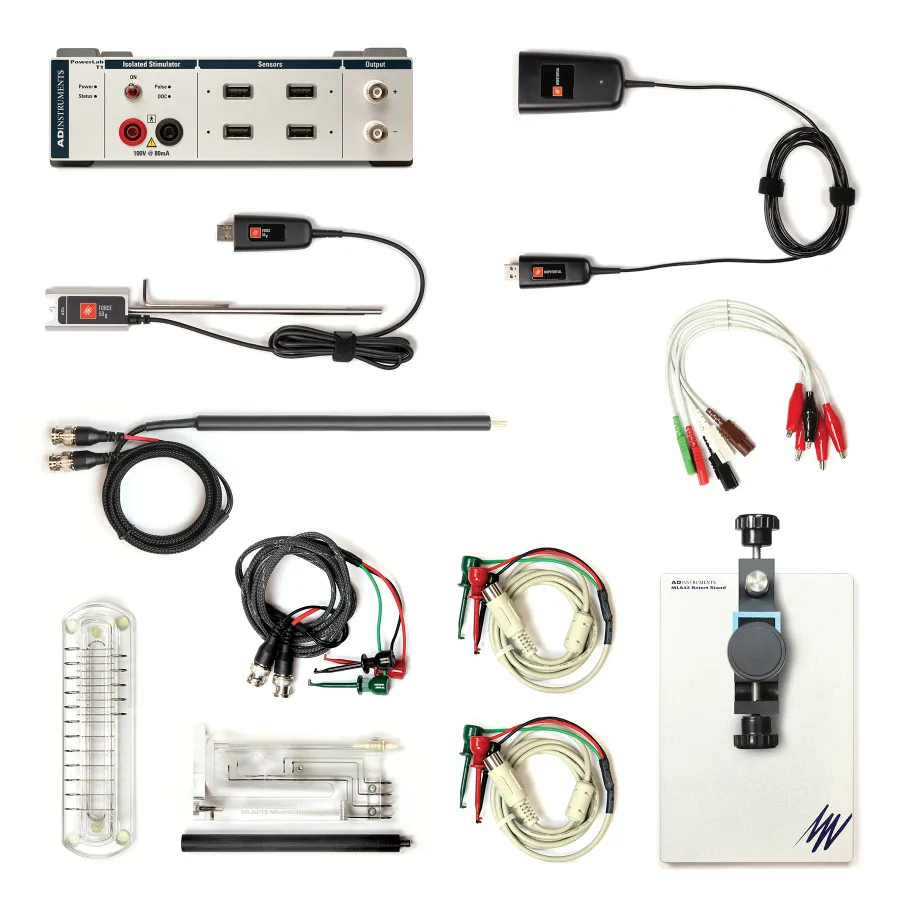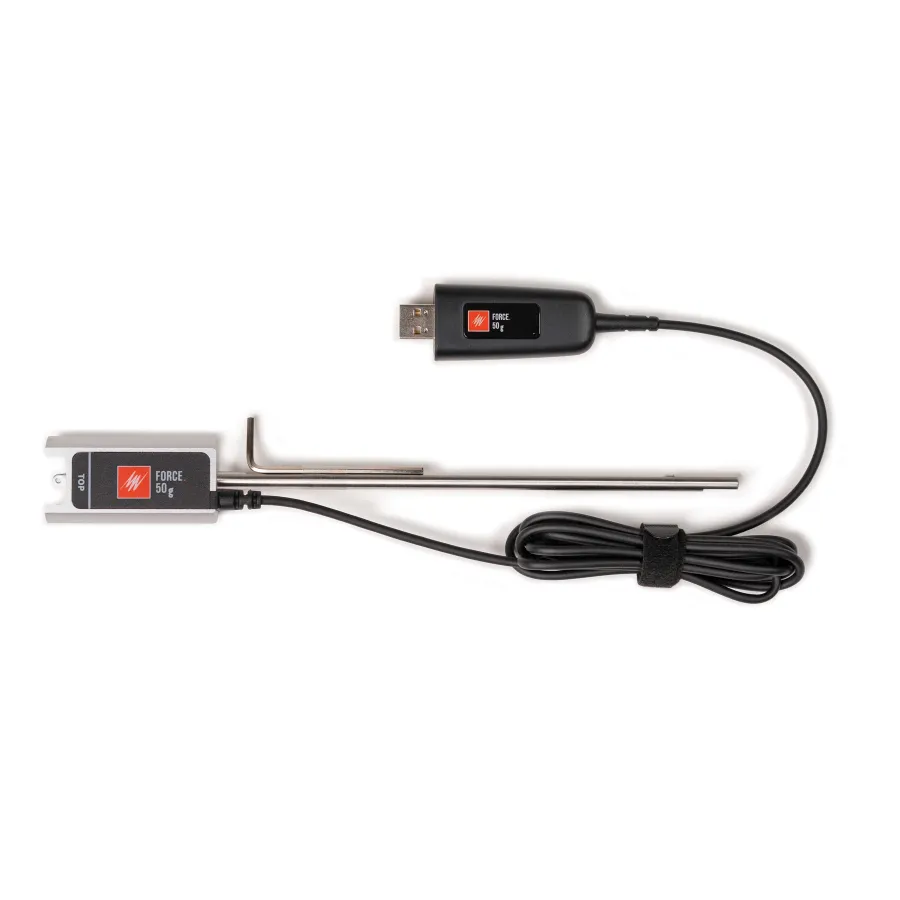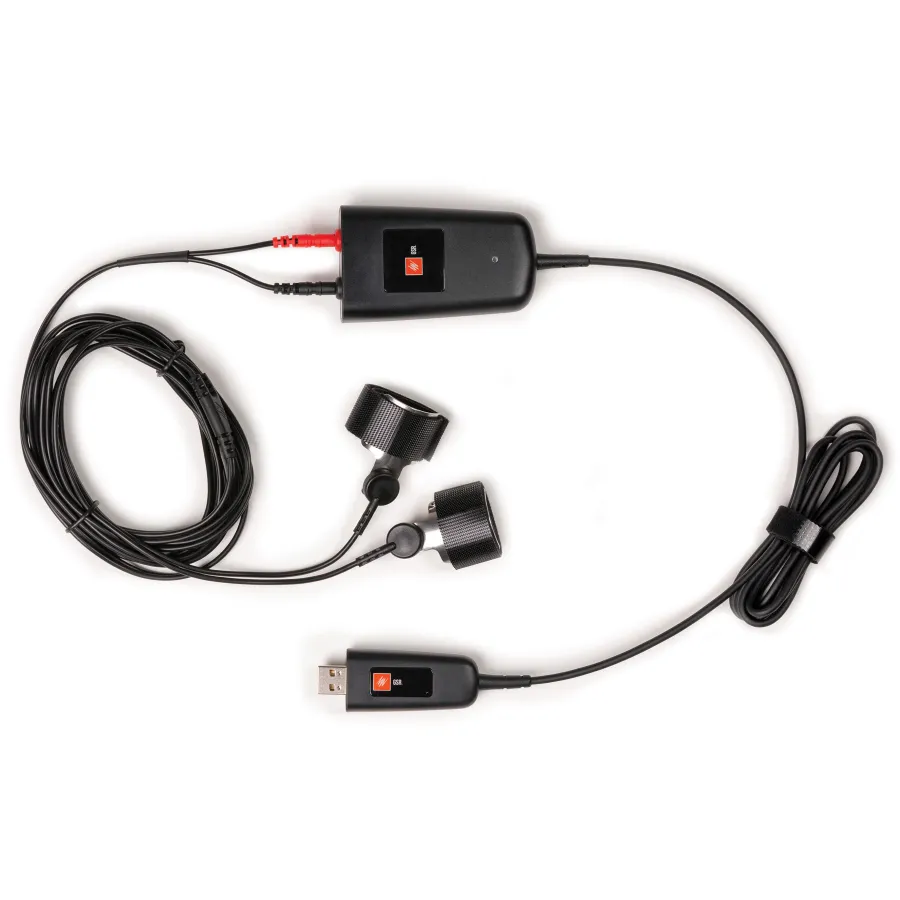

PowerLab 传感器让学生掌握学习方法,使他们能够在 Lt 或 Lt LabStation 中快速、轻松地记录生理信号。

 Play Video

功能强大、使用灵活的套件包满足您的一切需求

PowerLab 传感器可与LtLt LabStation 无缝集成,从而创建一个完整的主动学习平台,提高学生的参与度和理解能力。

将 PowerLab 传感器与我们的在线学习平台 Lt 结合使用:
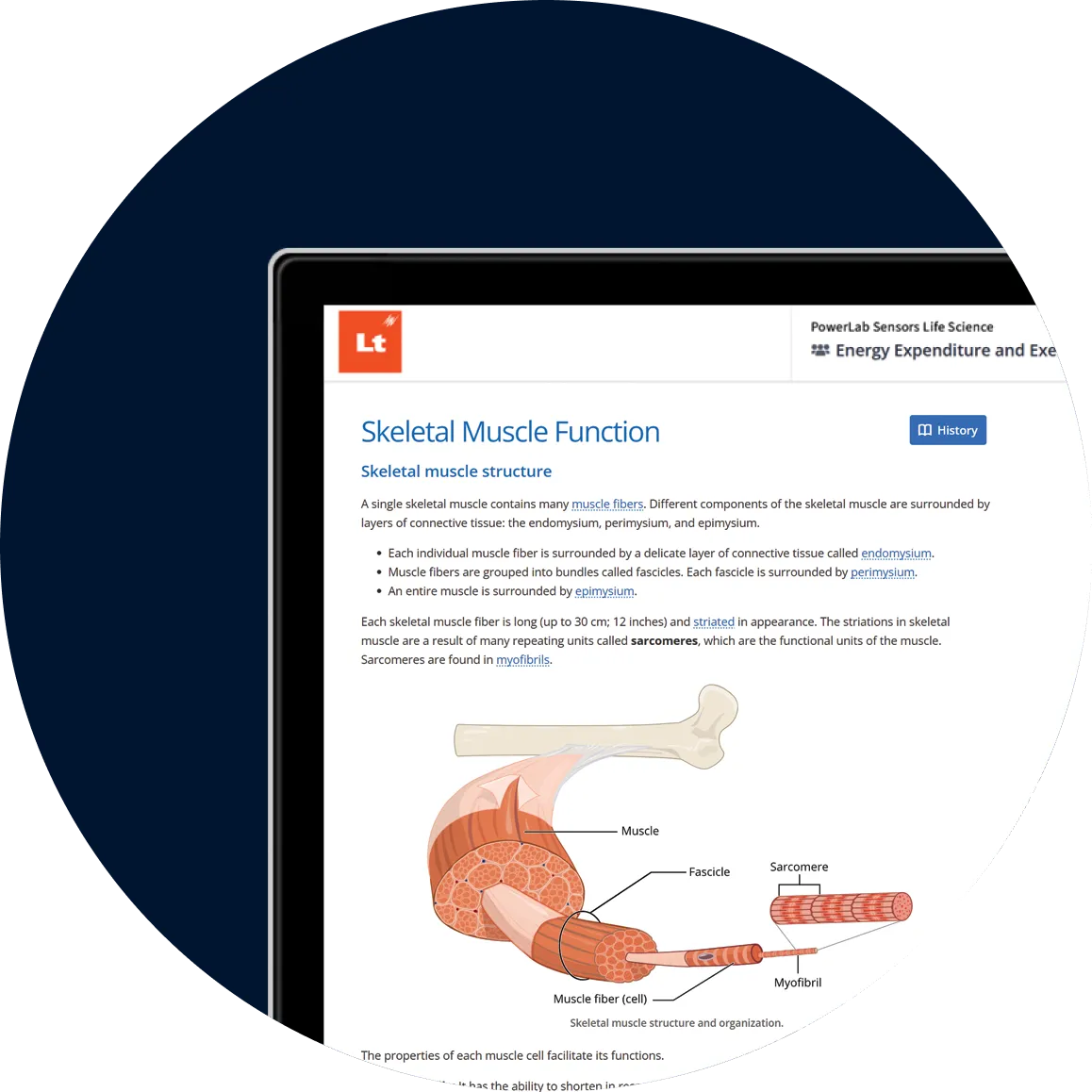
 

Lt Online Learning Platform

900 多个
完全可编辑的课程

完全可定制的内容

通过定制我们的现成课程来简化课程创建,这些课程包含高质量的内容、图片和实验,旨在支持您的教学风格。
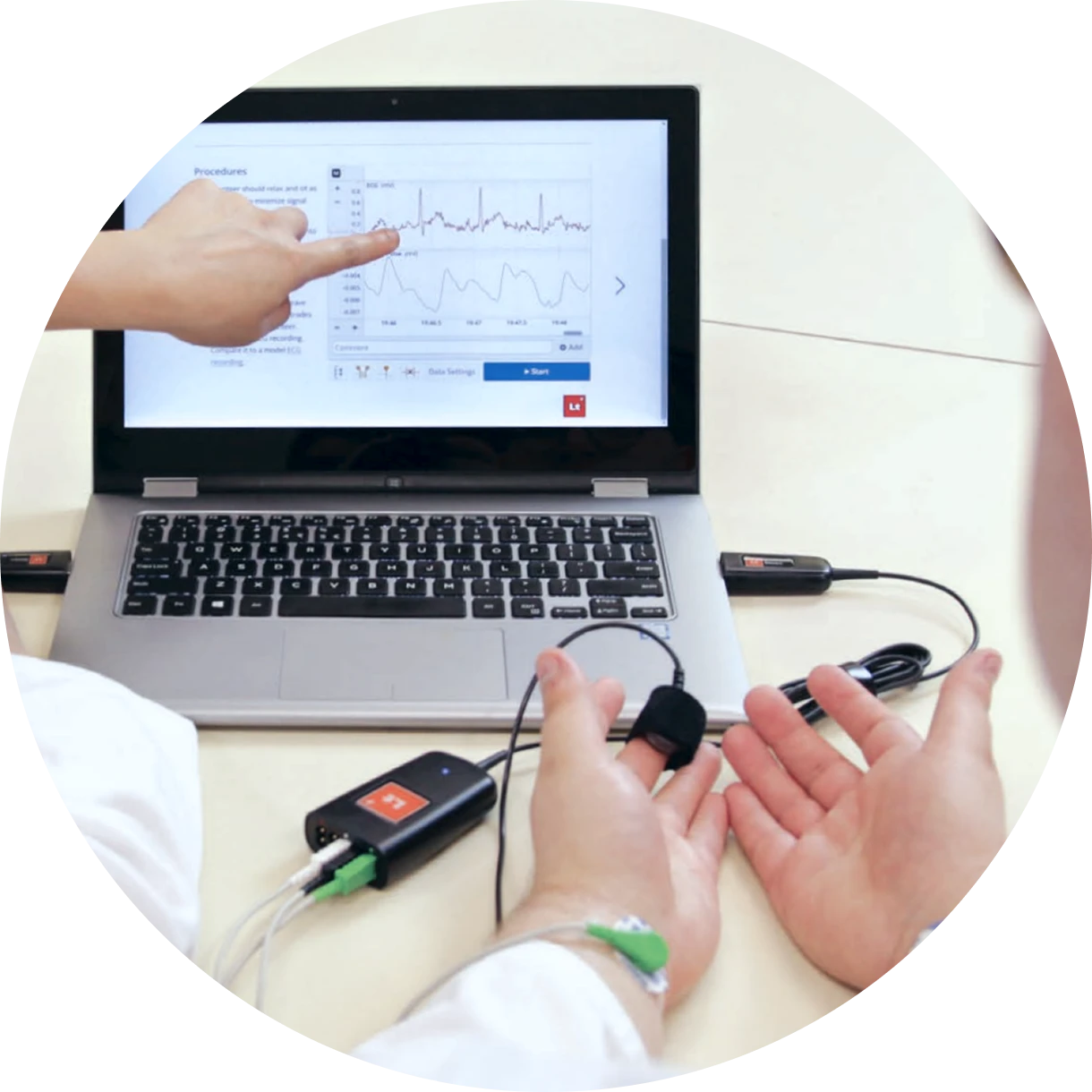
 

Lt Human Physiology Collection

 
通过 USB 连接

易用、一致的环境

PowerLab 传感器可直接插入 Lt 并进行记录,最大限度地减少了实验室设置时间,让学生始终处于他们已经熟悉的数字环境中。
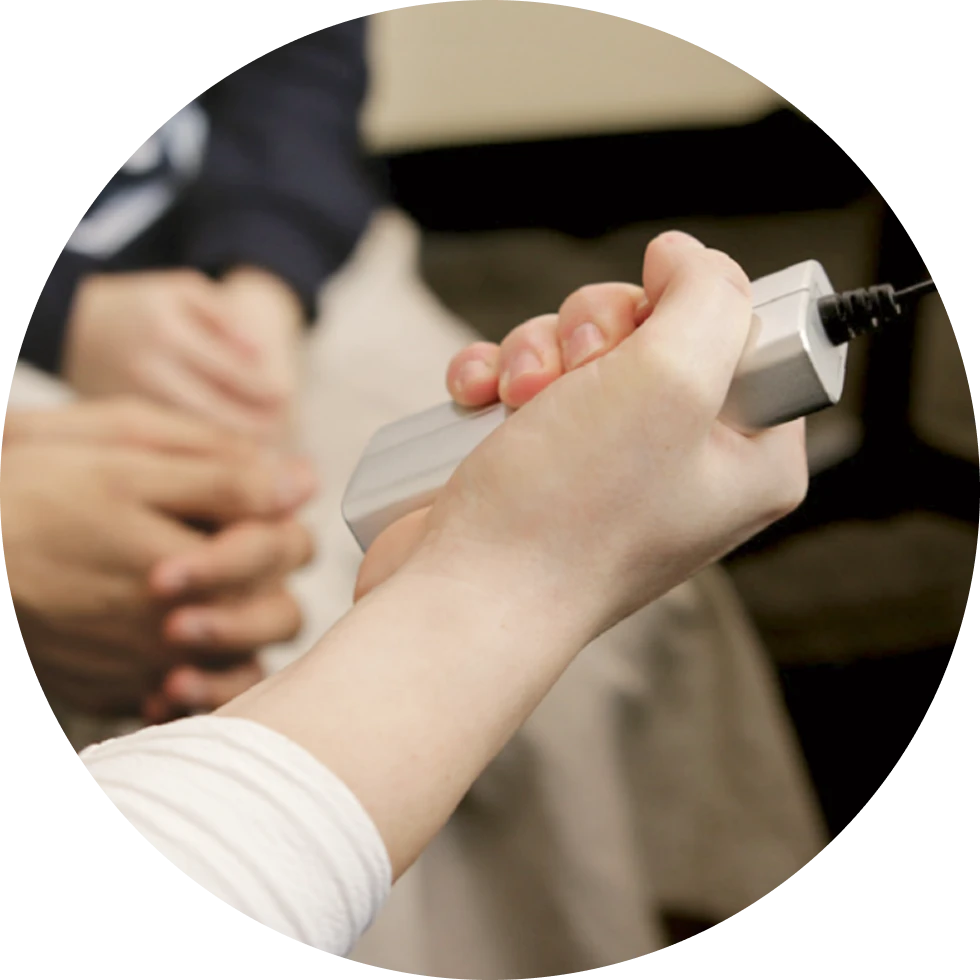
 

PowerLab Sensors


让任何空间都能成为
实验室

随时随地学习

通过将 PowerLab 传感器的简单 USB 连接与 Lt 基于云的学习平台相结合,您可以在任何地方插入和记录信号。


PowerLab 传感器套件和功能

PowerLab 传感器可以单独购买,也可以以核心或高级套件包的形式购买。

如果课程需要,还可提供更多传感器套件


核心套件包

PowerLab Sensors Core Bundle

具备以下能力

19个 DAQ 实验室
10个信号

+查看您可以教授的内容

产品编码:PSB002 | 点击进入产品详情询价:https://www.adinstrumens.com.cn/products/core-human-physiology-sensor-b…

核心人体生理学传感器套件包使您能够研究各种生物信号。它包含六个传感器、一个 PowerLab T1 以及许多人体生理学实验室数据采集所需的附件和耗材。

实验室和信号

✓19个 DAQ 实验室
✓10个信号

+查看您可以教授的内容

高级套件包

PowerLab Sensors Advanced Bundle

具备以下能力

✓27个 DAQ 实验室
✓13个信号

+查看您可以教授的内容

US$7,320.00
Ships from supplier Estimated delivery 1 month

高级 PowerLab 传感器套件包使您能够研究我们提供的所有生物信号。它包含9个传感器、1个 PowerLab T1 以及必要的附件和消耗品,可用于我们人体生理学实验室的数据采集。

实验室和信号

✓27个DAQ 实验室
✓13 个信号

+查看您可以教授的内容


✓功能强大

增强学生能力的主动学习工具。

✓灵活

可在实验室或户外记录数据。

✓准确

科研品质的传感器,用于培养未来的科学家。

✓耐用

专为要求苛刻的教学实验和学生反复使用而设计。

真实

在您眼前记录真实的生理信号。

Engage students in active learning with PowerLab Sensors

我们十款先进的 PowerLab 传感器可通过 Windows 或 macOS® 设备上的 USB 连接直接连接到 Lt。学生使用 PowerLab 传感器实时记录和分析自己的生理信号--收集 ECG/EKG、EEG、EMG、EOG、肺活量、呼吸频率和手指脉搏实验的真实数据。这种主动参与有助于学生在 Lt 的人体生理学实验室中快速掌握和理解核心生理概念。

"使用 USB 型传感器是一个绝妙的主意。我的学生不再担心操作复杂的'带按钮和旋钮的盒子'仪器,因为它需要专门的操作人员。他们插上电源就可以使用了!"

布尔汉-加赖贝博士
匹兹堡大学生物科学副教授
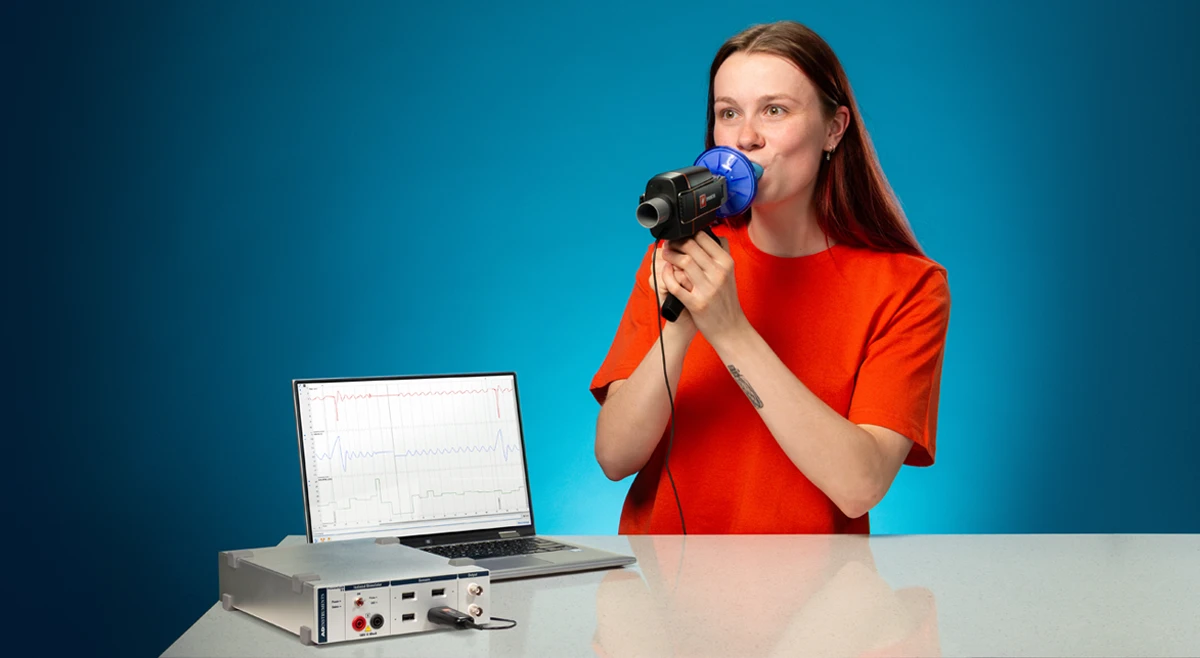
Seamlessly integrate PowerLab Sensors with the Lt
                          learning platform

ADInstruments 的 PowerLab 传感器可直接连接到 Lt 学习平台(这是一个基于云的教学系统,在全球生命科学和医学领域广泛使用),因此非常适合解剖学、生理学和运动科学等课程中的数据驱动型实践课程。即插即用的设计使教师可以建立具有实时数据记录功能的实用实验室,而学生则可以登录完成课程、回答问题并查看自己的结果。这种集成支持实验室内和远程学习环境,减少了设置时间,同时提高了参与度。

"易于使用--简单明了。[PowerLab] 传感器可以让学生专注于学习,而不是硬件设置"。

迈克-吉尔博士
奥塔哥大学生理学专业实践研究员
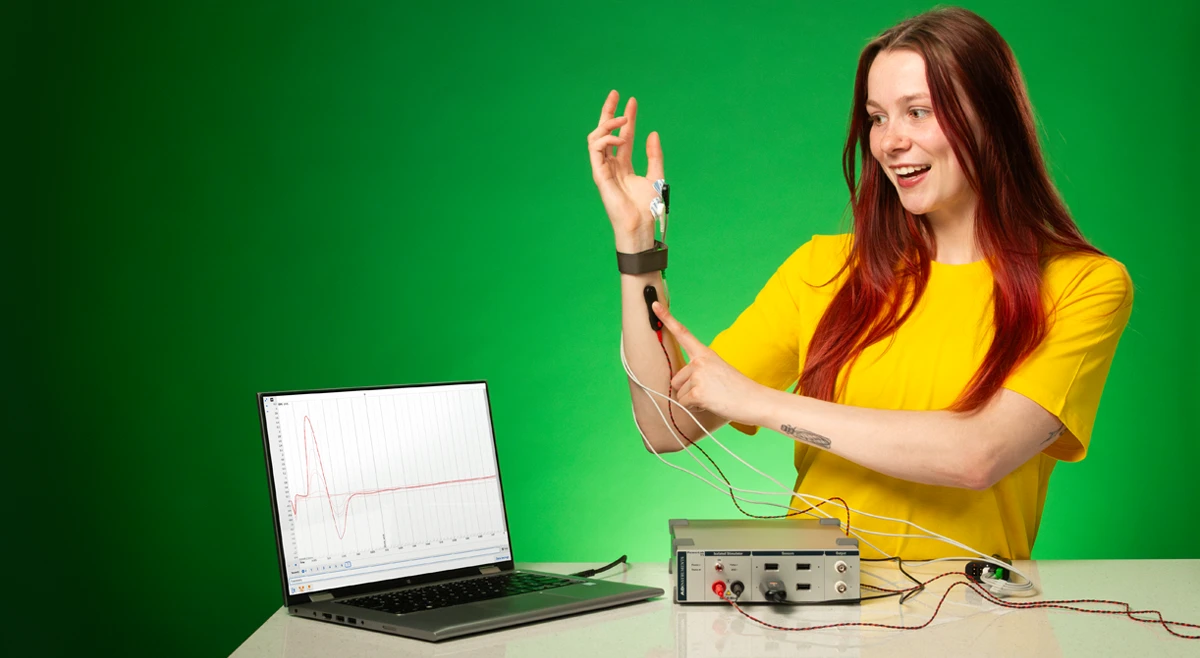
Powerful and accurate

PowerLab 传感器非常适合需要新硬件或额外硬件来开设人体生理学课程的教育工作者。这些传感器与我们的学习平台 Lt 一起,是一个集成的数据采集解决方案,可为学生提供真实的实验室体验,同时还能在面对面学习和远程学习之间灵活切换。

"我非常喜欢使用传感器,因为它更具实践性和互动性。它们肯定会让我更加投入到我正在做的工作中......能够亲手操作心电图仪、脉搏血氧仪、体温计等给课程内容带来了不同的理解"。

生理学学生
北卡罗来纳大学彭布罗克分校


PowerLab T1

生命科学课堂实验的理想数据采集解决方案。PowerLab T1 的设计经得起大量使用,同时还能保持数据的准确性和可靠性。通过高质量的数据采集、使用多个传感器时的高频信号同步以及长达 10 毫秒的 100V 80mA 隔离刺激,让您的学生获得科研级的体验。

US$3,095.00
Ships from supplier Estimated delivery 1 month
 

适合您实验室的软件解决方案

PowerLab 传感器与 Lt 和 Lt LabStation 无缝集成。

目前正在开发与 LabChart的兼容性,以提供更大的灵活性。
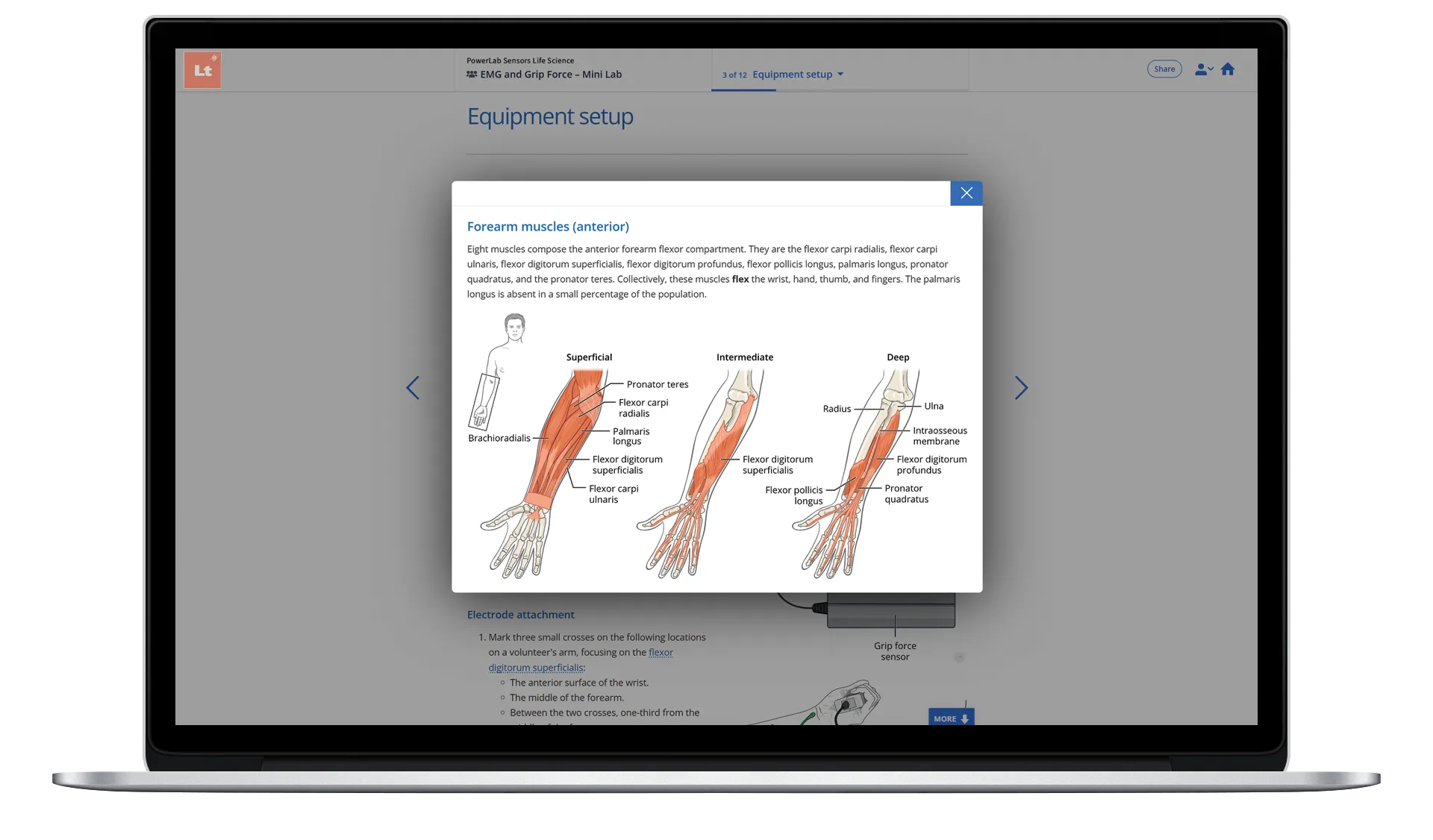
Lt

Lt

Lt 是一个在线学习平台,为生命科学、护理和医学提供即用内容。有 900 多个完全可定制的互动课程可供使用。通过将 Lt 与 PowerLab 传感器配对,学生可以实时记录和分析生理信号,从而通过实验强化理论。

Lt LabStation

Lt LabStation 是一个基于实验室的学习平台,您可以在离线环境中为学生创建交互式课程(需单独购买)。此外,还有 150 多个完全可编辑的实验课程可供使用。学生可以使用 PowerLab 传感器和 Lt LabStation 记录和分析生理信号,通过实验巩固理论。

使用 PowerLab 传感器捆绑包和 Lt 的 人体生理学系列可以教授哪些实验?

  • 27 DAQ Labs     11 Non-DAQ Labs


  • Include Bundle:
    Include Sensors:

    Airflow

    Record spirometry signals and analyze these to derive dynamic respiratory parameters, such as forced expired volume in 1 second (FEV1). Compare these with parameters derived from a simulated airway restriction exercise. Students also learn how to perform peak flow tests to assess pulmonary function.

    Products Required: PowerLab 肺活量计传感器

    Autonomic Nervous System

    Complete the same exercises as performed in a clinical assessment of ANS function. Examine the effects of nerve stimulation and other stimuli on skin potential. Investigate heart rate variability with normal and deep breathing. Observe the physiological effects of the Valsalva maneuver and of rapid postural change. Finally, perform pupillary exercises.

    Blood Pressure

    Learn how to measure blood pressure with a stethoscope, blood pressure cuff and sphygmomanometer, then visualize changes during a measurement with a Cardio microphone. Assess peripheral circulation changes with a finger pulse transducer. Then examine the effect on blood pressure in the arm with changes in cuff location, cuff size, and arm position. Finally, ask how leg position affects leg blood pressure.

    Products Required: PowerLab Sensors Blood Pressure, PowerLab 手指脉搏传感器 , PowerLab Sensors Cardio Microphone

    Body Temperature

    Learn how to measure body temperature at a variety of sites, how to avoid common errors in measurement, and how to interpret alterations in body temperature. Explore the differences between conductive and convective heat loss with a Thermistor Pod and temperature probe.

    Products Required: PowerLab Sensors Skin Temperature

    Brain Structure and Reflexes

    Refresh your knowledge of the major structures of the human brain and view MRI and CT scans. Test the knee and ankle jerk reflex responses with and without the Jendrassik maneuver. Students will also assess their pupillary and plantar reflexes.

    Breathing

    Students record breathing movements with a respiratory belt transducer to investigate various aspects of breathing, including the ability to hold the breath and the relation between breathing and heart rate.

    Products Required: PowerLab 手指脉搏传感器 , PowerLab Sensors Respiratory Belt

    Cardiorespiratory Effects of Exercise

    Record an ECG, blood pressure, and respiratory movements from a healthy volunteer, and compare the recordings made when the volunteer is at rest, during exercise, and immediately after exercise. Students will examine which factors control heart rate, blood flow, and ventilation before, during, and after exercise.

    Cardiovascular Effects of Exercise

    Record an ECG and the finger pulse from a healthy volunteer, and compare the recordings made when the volunteer is at rest and immediately after exercise. Students will examine the factors that control heart rate and blood flow to tissues before, during and after exercise.

    Cold Pressor Test – Mini Lab

    Measure blood pressure by auscultation and carry out the cold pressor test. Use a blood pressure sensor and a finger pulse sensor to measure blood pressure, heart rate, and pulse amplitude continuously whilst observing a bodily extremity's reaction to extreme cold.

    Products Required: PowerLab 手指脉搏传感器 , PowerLab Sensors Blood Pressure

    Diving Response

    Investigate the effects of the diving response on heart rate and peripheral circulation in humans during simulated dives as well as breath holding.

    Products Required: PowerLab Sensors Respiratory Belt, PowerLab 手指脉搏传感器 , PowerLab Sensors Blood Pressure

    Electroencephalography (EEG)

    Students explore the electrical activity of the brain. They record electroencephalograms, and analyze: the effect of various interfering signals; the changes to alpha and beta waves with eyes open and shut; and the effects of mental and auditory activity on alpha and beta waves.

    Electrogastrography (EGG) – Mini Lab

    In this lab, students measure the electrogastrogram (EGG, gastric myoelectrical activity) of a volunteer in a fasted state followed by a fed state. Students compare the frequency and amplitude of gastric waves before and after eating.

    Products Required: PowerLab 生物电传感器

    Electrooculography (EOG)

    In this laboratory students record electro-oculograms (EOG’s) in the horizontal plane. They will examine different eye movements including: angular displacement, saccades, smooth tracking, gaze-holding and gaze-shifting, and nystagmus.

    EMG and Grip Force – Mini Lab

    In this mini lab, students use surface electromyograms (EMGs) and a grip force sensor to examine the relationship between electrical activity and force during several muscle fatigue activities.

    This lab contains the same muscle fatigue activities as the Muscle and EMG lab, with the addition of EMG. The mini-lab could be used as a stand-alone activity, or as a substitute for some activities from the Muscle and EMG lab.

    Energy Expenditure and Exercise

    Heart and ECG

    Measure and analyze the ECG and pulse, and discuss the relationship between them. Compare variations between the different leads of a 12-lead ECG and then perform an Einthoven triangle analysis (ECG example data provided).

    Heart and Peripheral Circulation

    Examine the direction of blood flow in the veins through a series of occlusion exercises. Practice palpation techniques on arm and leg arterial pulses. Record the radial pulse and discover arterial anastomoses and the connections in the blood supply of the hand.

    Heart Sounds

    Listen to heart sounds via a stethoscope by performing auscultation on a volunteer. Record and analyze an ECG in conjunction with a phonocardiogram (PCG) and pulse measurements.Investigate the timing of ECG events and peripheral pulse relative to heart sounds, to determine their relationships.

    Products Required: PowerLab 生物电传感器, PowerLab 手指脉搏传感器 , PowerLab Sensors Cardio Microphone

    Hoffmann's Reflex

    Stimulate the tibial nerve to measure the Hoffmann's reflex. Determine how the latency and amplitude of the M-wave and H-reflex change under different conditions.

    Hyperventilation and Rebreathing – Mini Lab

    In this lab, students will use a spirometer sensor to compare how the respiratory rate and expired volume of gas change in response to hyperventilation and rebreathing expired air, in comparison to normal breathing. They will perform breath holds after each breathing pattern and correlate differences in breath hold duration with the proportion of CO2 in the blood.

    Products Required: PowerLab 肺活量计传感器

    Lung Volumes

    Record and analyze spirometry signals to derive static respiratory parameters, such as lung volumes and capacities. Perform basic tests of pulmonary function and simulate breathing with hyperinflated lungs.

    Products Required: PowerLab 肺活量计传感器

    Mechanics of Ventilation

    Examine mechanical properties of the lung and chest wall by measuring pressures generated passively and by contraction of expiratory and inspiratory muscles.

    Products Required: PowerLab 肺活量计传感器, PowerLab Sensors Blood Pressure, Respiratory Expansion Kit

    Muscle and EMG

    Record EMG during voluntary muscle contractions and investigate how coactivation and contractile force changes with increasing demand. Measure the decline in your Grip force during a sustained contraction and examine muscle fatigue. Discover how visual feedback, verbal feedback, and rest, impact our ability to sustain muscle contractions.

    Myotatic Reflex – Mini Lab

    Trigger the myotatic reflex on a volunteer by stimulating the patellar tendon. Observe the effects of the Jendrassik maneuver on the myotatic reflex.

    Peripheral Nerve Function

    Record an evoked EMG following electrical stimulation of the median or ulnar nerve at a variety of stimulating currents. Calculate latency and nerve conduction velocity.

    Reflexes and Reaction Times

    Students explore the similarities and differences of reflexes and reactions. Students first examine simple reflexes, and then use the PowerLab to examine their reaction times to stimuli under different conditions.

    Respiratory Sinus Arrhythmia (RSA) – Mini Lab

    In this mini lab students will evaluate the magnitudes of heart rate variability due to different types of respiration (normal, fast, and deep) using a respiratory belt sensor and biopotential sensor.

    Products Required: PowerLab Sensors Respiratory Belt, PowerLab 生物电传感器

    Skeletal Muscle Function

    Refresh your memory of the basic types of contractions. Record and measure muscular twitch responses to nerve stimulation and observe recruitment as stimulus strength increases. Test the effects of stimulus timing on muscle twitch summation and tetanus.

    Stroop Test

    Students will familiarize themselves with the Stroop Test. They will investigate the interference of conflicting messages, and examine the effects of the Stroop Test as an experimental stressor. This lab is suitable for students at all levels.

    Products Required: PowerLab Sensors Skin Temperature, PowerLab 手指脉搏传感器

    Thermoregulation – Mini Lab

    Compare the distribution of sweat glands on a volunteer’s hand versus their arm using Lugol’s iodine. Additionally, use a temperature probe to measure the heat released through vasodilated capillaries during exercise. This is a short lab that could be used as a stand-alone activity, or be combined with other related labs such as the Body Temperature and Cardiovascular Effects of Exercise labs.
    Products Required: PowerLab Sensors Skin Temperature

    Try adding a bundle or more sensors to see which labs you can teach.

  • Auditory System – Mini Lab

    In this lesson, students will use a tuning fork to conduct Rinne and Weber tests, and perform a modified audiometry test to determine their hearing threshold for different sound frequencies.

    Blood Clotting

    This module contains tutorials covering components of blood, blood cell formation, blood type, hemostasis, and breakdown of blood clots. In the lab, learners collect their own ​blood samples via sterile ​lancets to assess bleeding and coagulation time. They will also dilute a blood sample and use a hemocytometer to perform a platelet count and calculate the number of platelets per μL of blood.

    Blood Counting

    This module contains a tutorial covering components of blood, blood cell formation, and blood type. In the lab, learners collect their own finger prick blood samples to complete a variety of tests. First, students will prepare a blood smear and identify different blood cells under a microscope. Next, students will determine the hemoglobin concentration of their blood sample using a spectrophotometer and perform a hematocrit test. Finally, students will determine their blood type using Eldon Cards.

    Endocrine Physiology

    The focus of this virtual lab is to explain the basic functionality of the endocrine system, using three endocrine systems as examples: the stress axis (HPA), reproductive axis (HPG), and the metabolic axis (HPT). In the lab, students learn about hormone feedback loops with real-life scenarios. Next, an interactive activity encourages students to use their critical thinking skills to identify a hormone that was administered to a “virtual” rat by analyzing changes in the animal’s organ weights. Students also encounter a simple clinical example of hormone profiles. In the Preclinical Medicine Collection, students also work through a case study on growth complications.

    Glucose Absorption

    Students investigate how the gut and kidneys handle a carbohydrate load of either glucose or starch. They will eat or drink a variety of substances, then collect their urine and finger-prick blood samples to measure the glucose levels over time.

    Kidney and Urine

    Estimate your own bladder capacity, update your knowledge of kidney anatomy and view an abdominal CT scan, and perform urine testing on “patient” urine samples, and urine observation.

    Mechanical and Chemical Digestion

    In this lab, students will explore the effects of mechanical and chemical digestion on the breakdown of three different food substances that represent the macronutrient classes: carbohydrate, protein, and lipid. Student groups will use a simplified lab setup to simulate the processes of mechanical and chemical digestion to determine how important each is in the overall digestive process.

    Reproductive Physiology

    Learn how reproductive anatomy develops at birth and how it matures and responds to puberty. Investigate how the hormones of the hypothalamic-pituitary-gonad axis interact with reproductive organs in both the testicular and ovo-uterine systems. Explore hormonal control of the menstrual cycle in the ovo-uterine reproductive physiology lab and perform sperm count and motility measurements in the testicular reproductive physiology lab.

    Sensory Illusions

    Over a series of exercises students investigate mechanisms of sensory perception and discover techniques that send conflicting information to the central nervous system.

    Sensory Physiology

    Students familiarize themselves with their senses and experiment with sensory illusions. Learn how the body detects and perceives different sensations including touch, sight, taste, and movement. These activities are suitable for students at all levels, and can be performed without hardware.

    Water Balance

    Learn how the kidneys handle fluid loads. See how urine output and urine specific gravity differ after consuming isosmotic, hyposmotic and hyperosmotic solutions.


附加传感器和套件

Lt 内容集

常见问题、详细信息和技术规格

常见问题

您正在使用 Lt 传感器吗?请参阅我们的 从Lt Sensors 到PowerLab Sensors 的FAQ。


什么是 PowerLab T1 与 PowerLab 传感器?
这是埃德仪器专为现代课堂全新迭代的新一代硬件设备。全新产品线延续了专业级的数据稳定性与精准度,同时搭载全新通用 USB‑A 接口设计,大幅简化设备搭建流程。全系设备性能强劲、运行稳定,且具备出色的耐用性,能够适配学生日常高频使用场景,让教师专注教学,无需耗费精力调试与维修设备。


为什么 PowerLab 传感器不采用无线设计?
无线技术适用于部分应用场景,我们旗下的 Kaha 遥测系列即为专业无线科研解决方案。但无线设备更适合环境稳定、单一固定的专业实验室场景,而 PowerLab 传感器的设计初衷是随时随地、灵活适配各类教学与实验场景。
PowerLab 传感器采用有线设计主要基于两大核心考量:第一,以极简硬件配置,实现高品质生理信号采集,最大限度缩短设备安装与收纳时间;第二,让学生深度实操设备,熟悉科研级传感器的使用逻辑与操作流程。
有线生理传感器设计,既能保障信号质量与传输速度,规避各类无线设备信号干扰,无需额外搭配辅助硬件。传感器采用一体化完整结构,杜绝零散配件丢失问题。仅需插入 USB 接口即可开启数据采集,无需担忧设备电量与充电问题。同时有线线材可有效固定设备,避免学生误带传感器配件离场、造成设备遗失。


这些传感器可采集哪些实验数据?
无论是短时快速反射实验,还是复杂的心血管循环实验,全新 PowerLab 传感器均可精准覆盖、高效采集各类生理实验数据。


测量项目与对应传感器适配对照表
心脏活动(ECG)、肌肉活动(EMG)、眼动电位(EOG)、脑电活动(EEG)、胃肠电活动(EGG)——生物电传感器
心脏活动(ECG)——12导联心电模块
神经传导速度——PowerLab T1 + 生物电传感器
呼吸频率——呼吸绑带 / 肺活量计
肺容量——肺活量计
心率——指脉传感器 / 生物电传感器
脉搏振幅——指脉传感器
心音 / 柯氏音——心音麦克风
第三方设备模拟输出对接——PowerLab T1
血压(收缩压/舒张压)——血压传感器
握力与肌肉疲劳度——握力传感器
反射与反应时长——叩诊锤 / 按压开关
人体体温——皮肤温度传感器
关节角度与肢体运动——测角仪
通用力学测量——力传感器
皮肤电反应(皮电响应)——皮电传感器


PowerLab T1 特别说明
若需升级实验室实验配置,PowerLab T1 是一站式全能核心主机。设备支持电刺激实验、实现数据精准同步,同时提供模拟输出功能,可将各类模拟信号转换为高品质数字采集数据(DAQ),是实验数据采集的核心枢纽设备。


PowerLab T1 和传感器的尺寸规格是多少?
我们充分考虑实验台空间有限的使用场景,全系设备均采用轻量化、便携化设计。
PowerLab T1(核心主机):整机小巧紧凑,重量不足1.6千克,尺寸约 20.3 × 6.4 × 25.4 厘米,大小近似一本小型教科书,便携不占地。
PowerLab 传感器:传感器机身更加轻便,手持操作简单便捷,全系标配1.8米连接线,课堂实验操作空间充足,可灵活适配各类实验体位与操作场景。


设备如何连接电脑使用?
全系设备统一采用通用 USB‑A 接口,兼容性极强。我们优先推荐以 PowerLab T1 作为整套实验设备的核心中枢。
标准连接方案(强烈推荐):将各类传感器直接接入 PowerLab T1 主机,以 T1 为核心搭建实验平台,可实现数据高精度同步、解锁专业电刺激功能,同时规整桌面线路,保持实验台面整洁有序。
移动便携连接方案:户外移动实验、临时实验或仅使用少量传感器时,可直接将传感器插入电脑 USB‑A 接口独立使用。
两种连接方式均为即插即用,无需复杂配置,数秒内即可完成设备部署、投入实验使用。
 

数据录制需要满足哪些系统配置要求?
具体设备运行配置,取决于所使用的配套软件。为保障设备稳定流畅运行,可查看对应平台的详细配置规范:Lt 系统配置要求、Lt LabStation 系统配置要求。


PowerLab 传感器可适配哪些软件?
PowerLab 传感器开箱即可完美兼容 Lt 与 Lt LabStation 两款专业实验软件,即插即用、无需额外适配。
后续更新规划:针对广大用户常用的 LabChart 软件,适配更新正在开发推进中,后续将实现 PowerLab 传感器对 LabChart 软件的全面兼容。


有哪些现成实验可直接用于课堂教学?
全系列 PowerLab 传感器可适配平台内所有教学实验资源,全面兼容整套人体生理学实验合集,可直接应用于日常课堂教学。


能否搭配原有 PowerLab 设备混用?
可以。目前多数教学实验室均采用新旧设备混用方案,可在同一教学场景中搭配使用 PowerLab 26T 系统与全新 PowerLab 传感器,只需匹配对应设备的专属实验课程内容即可。常规教学中,可分组操作,部分小组使用传统PowerLab设备,部分小组使用全新PowerLab传感器。
需要注意:PowerLab 传感器为 USB 直连设备,无法直接对接传统 PowerLab 主机。因此,无法在同一个 Lt 或 LabStation 数据面板中,同时录制传统 PowerLab 设备与全新 PowerLab 传感器的数据,单个录制面板同一时间仅支持一种设备采样。
如需定制新旧设备混合教学的搭建方案,可联系专属商务顾问获取专业指导。


原有 Lt 传感器用户如何搭配新设备使用?
原有 Lt 传感器可与全新 PowerLab 传感器无缝混用,无需调整任何设备设置、不影响正常实验开展。两类传感器共用同款电脑采样程序与参数配置文件,兼容性极佳,可稳定搭配使用。


原有 PowerLab 用户能否在 LabChart 中编辑传感器配置文件?
可以操作,具体适配权限根据软件平台与传感器类型有所区分。
LabChart 配置编辑:目前 LabChart 自定义传感器配置功能正在开发中,功能上线后,可直接在 LabChart 内创建传感器参数配置,并用于软件内数据录制。注意:LabChart 中创建的自定义配置文件无法迁移至 Lt 平台,Lt 采样功能不兼容 LabChart 全部功能,部分自定义配置无法在 Lt 中生效。
Lt 配置编辑:针对 T1 刺激器,可直接在 Lt 平台内自主创建自定义刺激参数,无需依托 LabChart 软件。若需搭配生物电等其他传感器制作组合实验参数,需基于平台现有实验配置文件或配置库模板,二次添加刺激参数即可。其余传感器的 Lt 自定义配置功能已纳入开发规划,未来将支持所有传感器在 Lt 平台内直接编辑参数配置。


搭配 Lt 软件使用的 PowerLab 传感器,可通过 USB 接口兼容 macOS 及 Windows 系统的台式电脑与笔记本电脑。
搭配 Lt LabStation 软件使用的 PowerLab 传感器,仅支持 Windows 系统的台式电脑与笔记本电脑(USB 连接)。
如需了解更详细的设备与浏览器适配规范,可查阅 Lt 设备及浏览器支持说明。


产品代码

搭配 Lt 使用的 PowerLab 传感器可通过 USB 兼容 macOS 与 Windows 系统的笔记本电脑或台式电脑。

搭配 Lt LabStation 使用的 PowerLab 传感器仅可通过 USB 兼容 Windows 系统的笔记本电脑或台式电脑。

有关更具体的说明,请参阅 Lt 设备与浏览器支持页面。

数据卡

以下列出包含各 PowerLab 传感器规格的数据卡片:

请参阅我们的Lt 支持中心中的 PowerLab 传感器支持文章。

提交支持请求

有关于 PowerLab 传感器或 Lt 的问题?我们的教育专家随时准备提供帮助。

联系我们